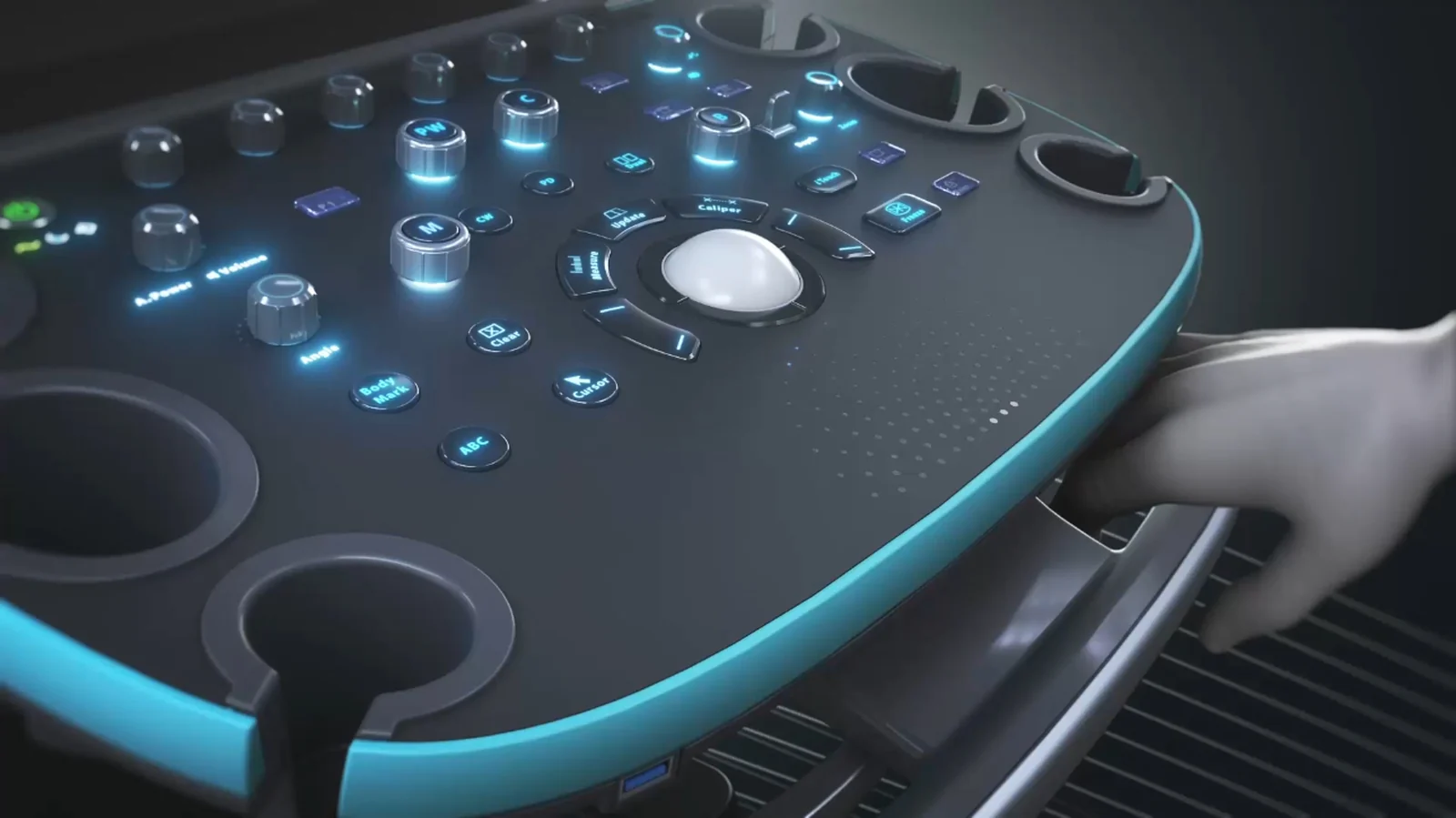
Ultrasound guidance — because placement is critical to the result.
Every injection placed exactly where it’s needed, watched in real time — the foundation under every procedure here.
What it is
Diagnostic and interventional ultrasound lets us see the structure that hurts — and watch the needle reach it in real time. It is the foundation under the whole toolkit.
Why it matters
A treatment placed near the right structure is not the same as one placed in it. Image guidance is how a regenerative injection actually reaches the tissue that needs it — placement is critical to the result.
How we use it
Ultrasound guides the diagnosis, the harvest, and every placement — PRP, bone marrow concentrate, hydrodissection, and the rest.
Teaching and training
Dr. Paul is Fellowship Site Director of the Stanford Healthcare Primary Care Sports Medicine Fellowship, where ultrasound-guided technique is part of what fellows are trained in. He also teaches image-guided injection to practising physicians, and has developed technique for image guidance and for patient comfort during procedures.
Common questions
Asked and answered
What does ultrasound guidance actually do during a procedure?
Diagnostic and interventional ultrasound lets us see the structure that hurts — and watch the needle reach it in real time. It is the foundation under the whole toolkit.
Why does placement matter so much?
A treatment placed near the right structure is not the same as one placed in it. Image guidance is how a regenerative injection actually reaches the tissue that needs it — placement is critical to the result.
What procedures use ultrasound guidance here?
Ultrasound guides the diagnosis, the harvest, and every placement: PRP, bone marrow concentrate, hydrodissection, and the rest.
Does ultrasound guidance guarantee a treatment will work?
No. Guidance improves accuracy; it does not turn the wrong treatment into the right one. The diagnosis still comes first.
Which joints can be injected under ultrasound guidance?
Most of them, and the deeper ones benefit most. In practice that means the hip, the shoulder, the knee, and smaller targets in the foot and hand — along with tendons, bursae, and the space around a compressed nerve, where the target is millimetres wide and cannot be found by feel.
Is an ultrasound-guided injection more accurate than one placed by feel?
Yes, and the gap widens the deeper and smaller the target is. Placing by landmark relies on surface anatomy that varies from person to person; ultrasound shows the actual structure and the needle reaching it, in real time. For a large superficial joint the difference is modest. For a hip, a nerve, or a specific tendon it is the whole procedure.
Does an ultrasound-guided injection cost more?
Guidance is part of how a procedure is done here rather than an add-on line item, so it is not priced separately. Cost is discussed openly at your evaluation.
Dr. Paul in the literature
Selected peer-reviewed work
- Paul RV, contributing author. DeLee, Drez & Miller’s Orthopaedic Sports Medicine — non-operative sports medicine, clinical utility of musculoskeletal ultrasound, and point-of-care orthobiologic protocols.
- Paul RV, contributing author. Essential Sports Medicine (2nd ed.) — clinical evaluation, diagnostic ultrasound, and non-surgical management of chronic hip, pelvic and groin injuries in athletes.
Educational information, not medical advice or a diagnosis. Care is individualized; not every treatment is right for every patient, and results vary.