The doctor athletes see when no one can find the problem.
Athletes from Real Madrid. Top-100 players on the ATP tour. Founders and Olympians who could buy any medical opinion in the world — and flew in for this one. When the scan looks clean but the body still won’t perform, they come to San Francisco.
The doctor doctors send people to.
Some injuries have already been through everyone. A knee valued in the millions that two surgeons have looked at. A foot that three specialists couldn’t settle. By the time those cases reach Dr. Rowan Paul, the patient has usually been told the same thing more than once — and told wrong. He is the doctor other doctors send those people to. And when a surgeon’s own hands are the problem, he is the doctor surgeons come to themselves.
For a career built on returning professional athletes to play, the professionals have kept coming: several San Francisco 49ers, athletes from Real Madrid, top-100 tennis players on the ATP tour, Olympians, and the founders and executives running the world’s largest technology companies. He has been flown across the world to consult when a career — or a season — is on the line. At World Cup events he has served as event physician for alpine Super-G, Nordic skiing, and short- and long-track speed skating, at times effectively the whole event: the disciplines where a single knee, on a single turn, ends everything a person has trained their life for.
They don’t come for a procedure. They come for an answer.
He left the practice that made him.
Rowan V. Paul, MD, spent ten years as a full partner in a respected San Francisco orthopedic surgery practice. Then he left it. He had seen the limits of the scalpel — patients sent through years of specialists and procedures, only to be told surgery was the last option left. He believed the body could do more, if someone took the time to find the real problem first.
Before it was a field, it was his conviction.
In 2008 — before “interventional regenerative orthopedics” was a recognized field — he was already practicing it. He has published repeatedly in the field and contributed chapters to its textbooks, and today he is actively running cutting-edge IRB-approved prospective clinical trials: research at the field’s active frontier, not its archive.
He also helped build the institutions that now define it. He co-founded TOBI Networks. And he has been part of TOBI — The Orthobiologic Institute — since roughly its second year: now in its sixteenth, and long the field’s central teaching body, where the physicians practicing regenerative orthopedics come to learn the work; he remains a board member, speaker, and its long-time moderator. He has presented and keynoted at the Global Regenerative Academy, where he also serves on the Scientific Advisory Board, alongside the Regenerative Medicine Orthopaedic Society and MuseCell Innovations. He has presented to and moderated for tens of thousands of physicians — in person across North America, South and Central America, Europe, and Asia; virtually, on every continent.
Diagnosis first. Then biology.
For more than fifteen years he has practiced image-guided regenerative orthopedics — using ultrasound to see an injury clearly, then treating its cause. He spent twelve of those years becoming a master of ultrasound-guided musculoskeletal diagnostics alone: the work that lets him locate a problem others miss. His procedures are often autologous and minimally invasive — PRP, bone marrow concentrate, micronized lipoaspirate, alpha-2-macroglobulin, nerve hydrodissection, percutaneous tenotomy — but not only that. He works at the leading edge of the field’s trials and collaborates with companies worldwide, bringing the newest tools to the cases that need them — increasingly, energy-based medicine, including shockwave therapy, the MLS laser, and the Regenlase work he is pioneering. The cutting edge, applied judiciously — never instead of a diagnosis, always in service of one.
The problems other doctors send away.
His signature work is skilled, non-surgical treatment of the injuries usually handed straight to a surgeon: rotator cuff tears, Achilles tears, knee osteoarthritis. What separates him is where he can reach — image-guided intraosseous treatment, percutaneous subchondral decompression, nerve hydrodissection — treating the bone and nerve sources of pain that surface-level injections never touch.
He also works where most don’t look: the fascial layers, and the chain of interconnected tissues that cause injury and re-injury. He has studied why bodies keep breaking in the same place, and he treats the connecting areas others overlook — not for their own sake, but in service of the actual solution. A full-body assessment is the starting point, because his reasoning is simple: it’s all connected.
Then there is the work almost no one else does. He is a pioneer in the non-surgical treatment of Ehlers-Danlos syndrome and hypermobility — and he has worked the full width of that spectrum: patients who arrive unable to walk, and patients competing at the top of their sport, and the long road of helping a person move from the first toward the second. He pioneered percutaneous, non-surgical closure of diastasis recti — abdominal separations of four to five centimeters that would otherwise mean surgery — using the body’s own biology (PRP, bone marrow concentrate, PRF) instead of mesh and an operating room: work that has meant the most to women recovering from childbirth and to people rebuilding after surgery.
Bodies at the edge of performance.
Board-certified in both family medicine and sports medicine and fellowship-trained, Dr. Paul is an Assistant Professor at Dartmouth’s Geisel School of Medicine and Fellowship Site Director of the Stanford Healthcare Primary Care Sports Medicine Fellowship. He serves as Head Company Physician for the San Francisco Ballet, has held a team role with the Oakland Athletics, and has served as event physician for U.S. Olympic Nordic skiing — caring for bodies at the edge of human performance, and for active people of every age who refuse to be told to simply stop.
The doctor’s doctor.
Ask who his patients are and one answer keeps repeating: doctors. Plastic surgeons, orthopedic surgeons, general surgeons, PM&R and sports medicine physicians — the people trained to see every option choose him. The injuries that reach him are often the ones several doctors have already tried and reached the limit of. When a surgeon’s livelihood is in their hands, he is the one they trust to save them.
He asks nothing of a body he doesn’t ask of his own.
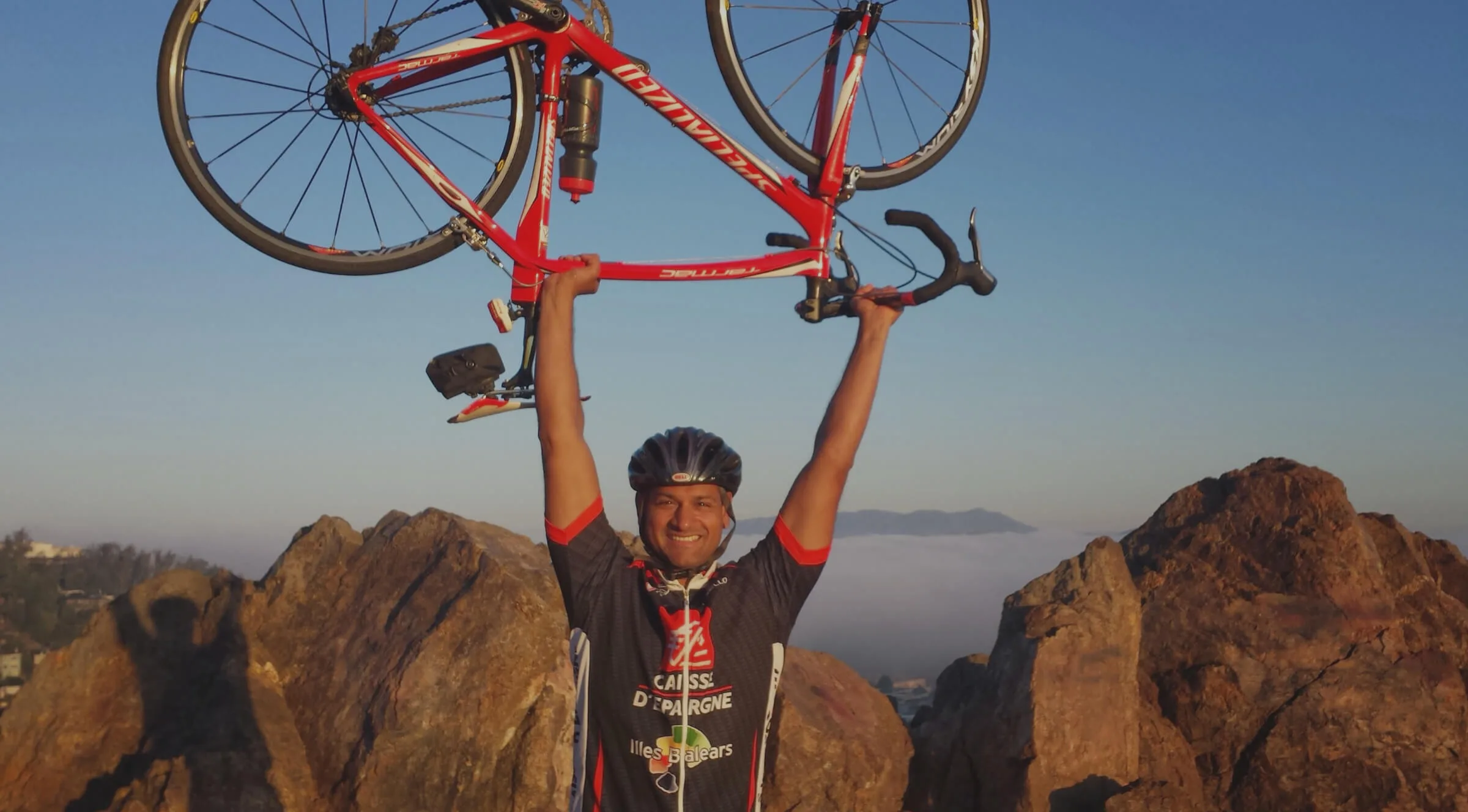
A Division I swimmer at Brown. A black-belt martial artist. An avid skier, cyclist, swimmer, and hiker. And a builder outside the clinic too — a three-time exit entrepreneur and co-founder of Physical Longevity.
Diagnosis first. Regeneration second. Surgery only if it’s truly the answer.
CONSULTING, ADVISORY + VENTURES
Educational information, not medical advice or a diagnosis. Care is individualized; results vary.